“Ethiopia will quickly stretch out her hands to God.” - Ps 68:31 (NKJV)
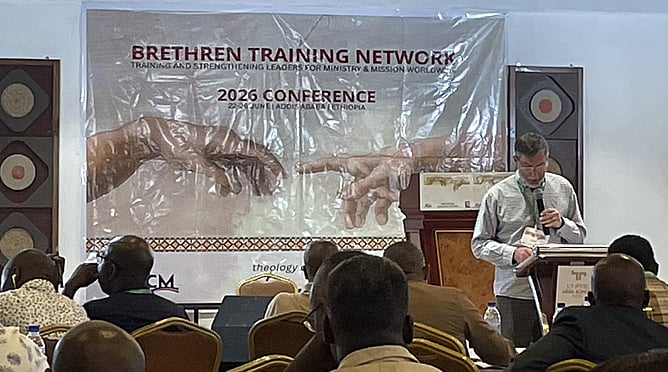
Dr Ian Payne speaking on the imago Dei, the biblical doctrine of humanity made in God’s image (check out his book on the topic: https://koorong.com/products/the-message-of-humanitybible-speaks-today-themes-series-661318)
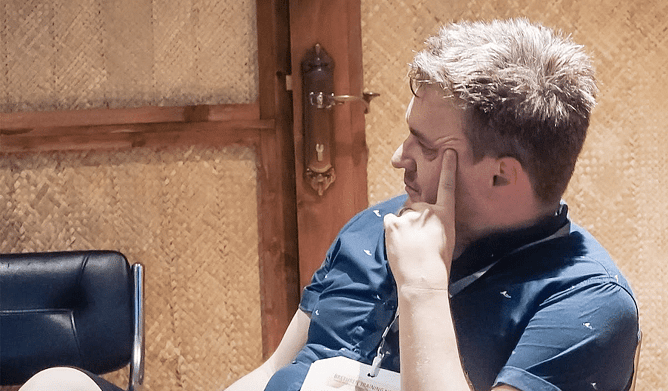
Dr Richard Goodwin facilitated a workshop on “Responding to the Manosphere”, an issue that is impacting young men across the globe.
Several Pathways personnel—Dr Ian Payne (board member), Michael Hanson (board chair), and I —recently attended the Brethren Training Network (BTN) conference held in Addis Ababa, the capital city of Ethiopia. If that sounds like a long way to go, you’re not wrong—and the travel costs reflect that reality. Thankfully, Lichfield Lands Trust shares the vision for Bible training we have at Pathways and so generously helped fund the trip.
BTN is comprised of Open Brethren Bible colleges from around the world. Pathways is a part of the network and I currently serve on the BTN executive committee. Every four years, BTN holds a conference that brings together Bible teachers, theologians, administrators, and church-based trainers from all over the globe to share ideas about theological training and to build mutually fruitful relationships.
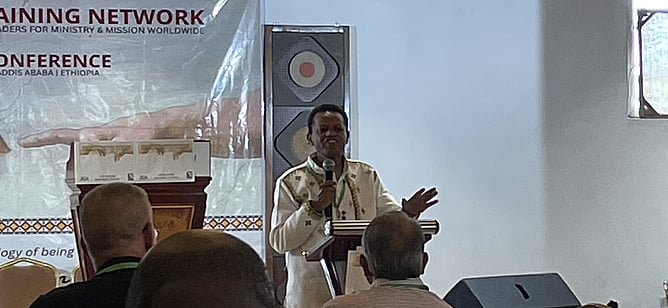
Mulugeta Endeshaw, leader of the Ethiopian network of Brethren churches.
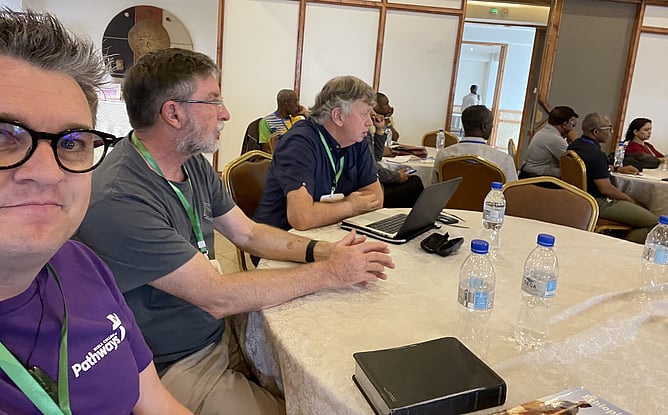
The Kiwi contingent.
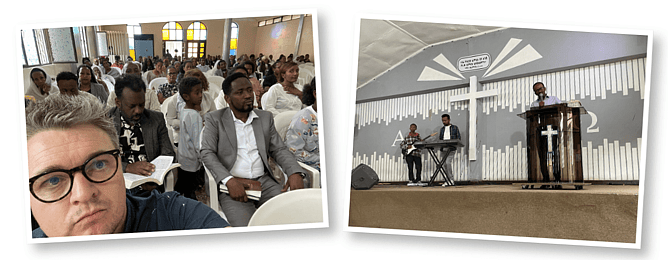
The Pathways team visiting Gofa Brethren Church.
The theme of this conference was “Being Human”, a topic that Ian addressed in his plenary session based on his book exploring the imago Dei, the image of God in humanity. It was a wonderfully rich, affirming theme that lies at the heart of so many contemporary crises. As such, it formed the basis for a number of workshops exploring issues to do with human identity, including artificial intelligence, mental health, the Indian caste system, and one I facilitated on the “manosphere”. Although the term was unfamiliar to many, the phenomenon was not. I learned that these online communities selling young men on very twisted versions of masculinity is not just a feature of the West but a challenge facing African, Asian and Subcontinental society too.
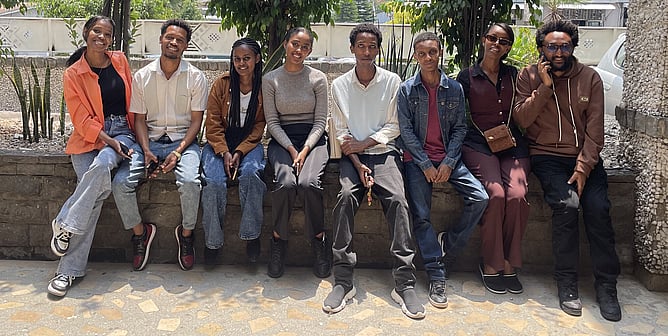
Just a few of the local musicians who led worship at the conference spent six months in preparation.
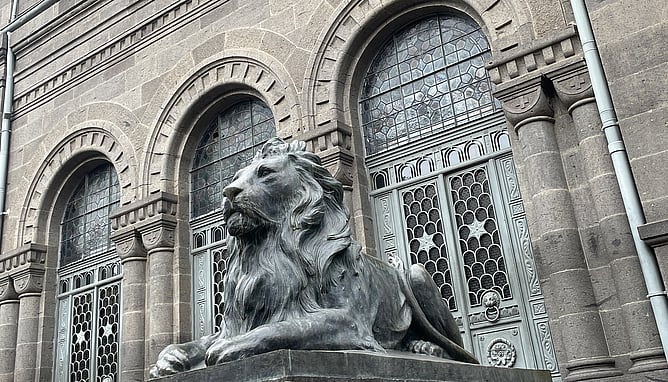
The Lion of Judah outside an Ethiopian Orthodox church. ~35% of Ethiopians belong to this denomination, which dates back to 330AD.
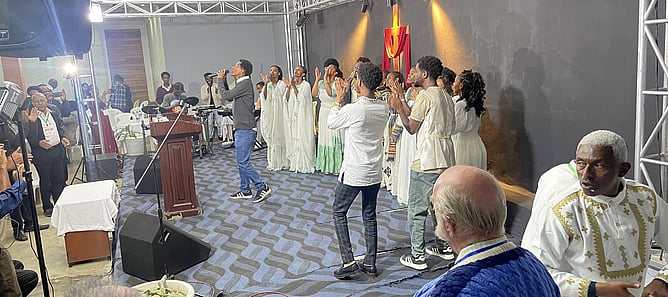
Ethiopian Christians hosted a banquet for BTN complete with traditional Ethiopian music at Saris Brethren Church.
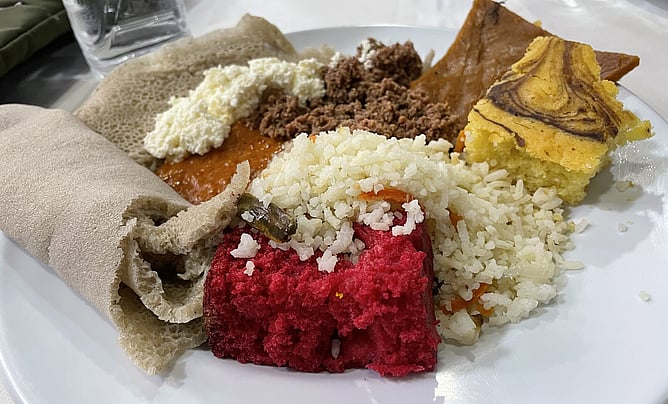
Typical Ethiopian fare, including their famous fermented flatbread, injera.
The Ethiopian Church, Old and New
Ethiopia’s tourist slogan is “Land of Origins”. Certainly Ethiopian culture feels ancient. Entering an Ethiopian Orthodox church is a step into a faith tradition that dates back millennia. The country, which, referred to as “Cush”, gets its first scriptural mention as early as the Bible’s second chapter (Gen 2:13), has been home to a Jewish community that traces its beginnings to the Queen of Sheba’s return after visiting King Solomon (1 Kg 10:1–13). The first known Christian convert is recorded in scripture, an Ethiopian royal servant returning home after a religious pilgrimage to Jerusalem (Acts 8:26–40). Christianity is deeply interwoven with Ethiopian history and culture. The psalmist prophesied that “Ethiopia will quickly stretch out her hands to God” (Ps 68:31 NKJV). It seems she hasn’t stopped since.
By contrast, the Open Brethren church dates back to just the 1950s. In a few short decades, it has grown to 320+ assemblies. They are highly organised, with each local assembly considered a “branch” of the single national Brethren church. In an address to conference attendees, Brethren leader, Mulugeta Endeshaw noted that the expulsion of foreign missionaries from the country under communist rule (1974–1991) had the providential effect of forcing Ethiopian nationals to step into the leadership vacuum. As such, it has long been a church run by Ethiopians for Ethiopians with a distinctly Ethiopian flavour.
That flavour was on full display at various points throughout the conference. One evening, attendees were treated to a banquet hosted by the Saris branch. The worship team, who had spent six months preparing for the conference, sang Amharic hymns and danced in traditional garb while other church members dished up mainstays of the national cuisine—injera, wat, ayib. The music sounds beautifully strange to Western ears, and is undeniably entrancing (listen for yourself).
These beautiful displays of Ethiopian tradition served as a reminder that the gospel is meant to be contextualised into the culture of “every tribe and language and people and nation” (Rev 4:9 NIV). In contrast to Islam and Judaism, Christianity does not privilege any one culture over any other. Gods has a dream (and promise!) of a new world that includes “the glory and honour of the nations (Rev 21:26). The conference gave us a preview of what “glory and honour” our Ethiopian sisters and brothers might bring with them.
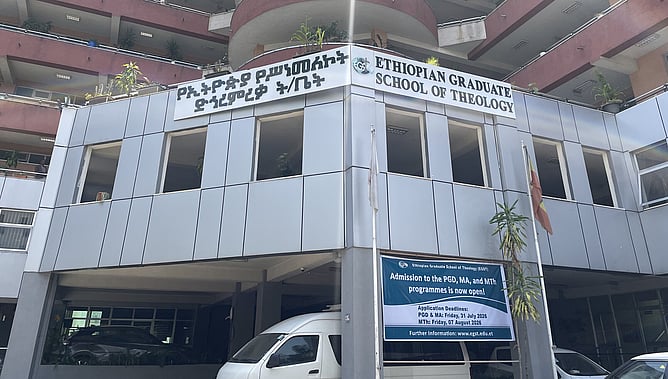
Thanks to his connections through Theologians Without Borders, Ian arranged a tour of Ethiopian Graduate School of Theology (EGST), a world-class theological institution.
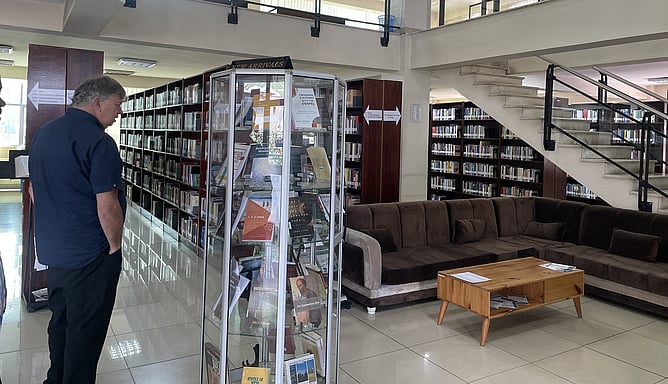
EGST library.
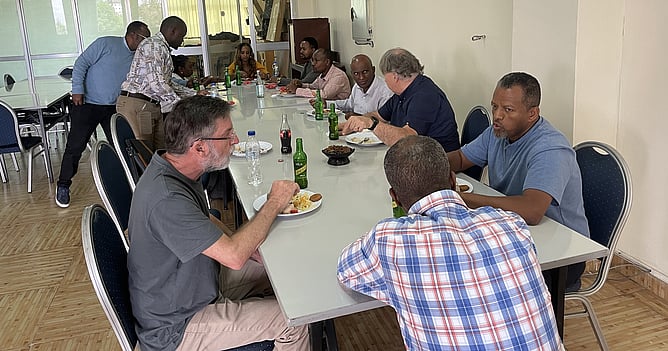
Lunch with EGST faculty and staff.
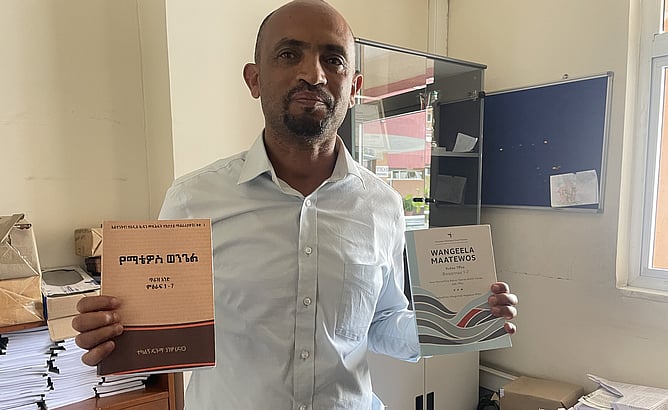
NT scholar Dr Tekalign Duguma holding two of his own commentaries on Matthew in different Ethiopian languages. Dr Duguma runs theological publishing house Onesimus out of the EGST offices.
Putting the “N” in “BTN”
In the age of video streaming, the value in this type of conference is not so much in the teaching, as good as it was, so much as in the networking. Relationships formed and fostered are the reason attendees travel from far-flung countries—like New Zealand—to attend the conference rather than simply tune into a livestream.
A couple of conversations in particular were significant for Pathways. We met with representatives from GLO (Europe) to discuss ways we can reinvigorate our historic ties to strengthen our respective ministries in the present. We also met with faculty from Australian College of Christian Studies (formerly Emmaus) to consider possible areas for collaboration.
Some of the most meaningful connections were those we made with attendees spearheading powerful ministries in the Majority World. There’s Paul Natuhumuriza, who has put his training in community development to good use by founding a cutting-edge Christian school that has become a big story in Ugandan media, but doesn’t receive any government support. Similarly, Sajida Iqbal founded and runs a school for underprivileged children in Pakistan. Thang Bu Naing helps run a Bible college on a shoestring in Myanmar. Moses Kokoyo does similar work in Kenya, as well as a holistic gospel ministry, Alms Basket. Mirzabek Dosov, the country’s first ever recipient of a PhD in theology, also teaches in their School of Leadership and his wife, Zalina, a psychologist runs a social media ministry, Hope. They are all worthy ministries and desperately underfunded. (It’s worth noting, too, that many attendees of the conference were funded through BTN grants.)
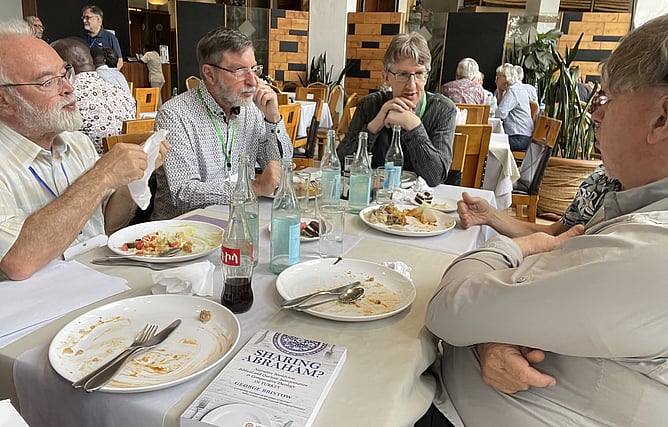
Kiwis in conversation with reps from GLO Europe about strengthening our historic ties.
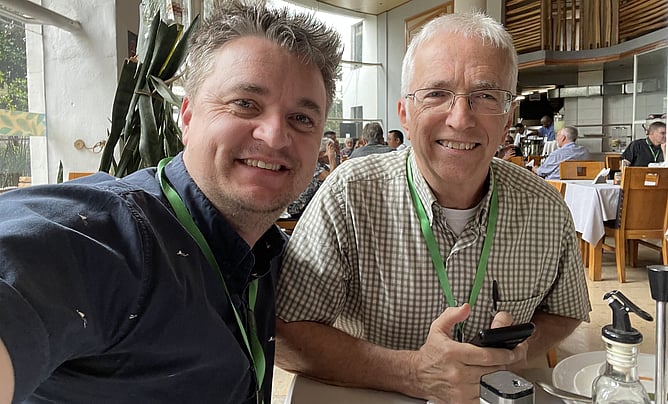
Speaker Dr George Bristow from the USA also happens to be Richard’s third cousin!
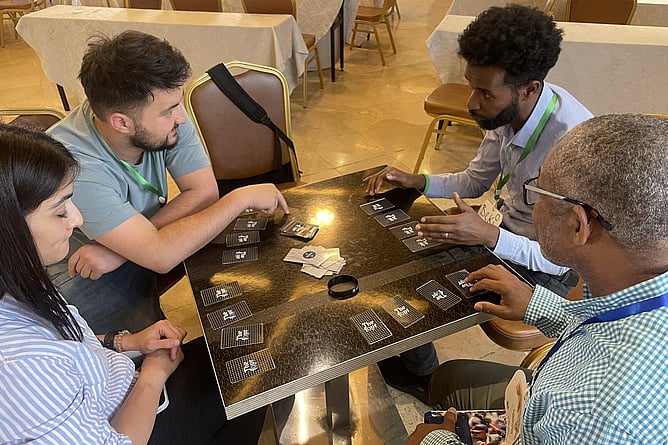
Children’s worker Bereket Berehanu demonstrates how to play a card game, of his own design, that explains the gospel to kids.
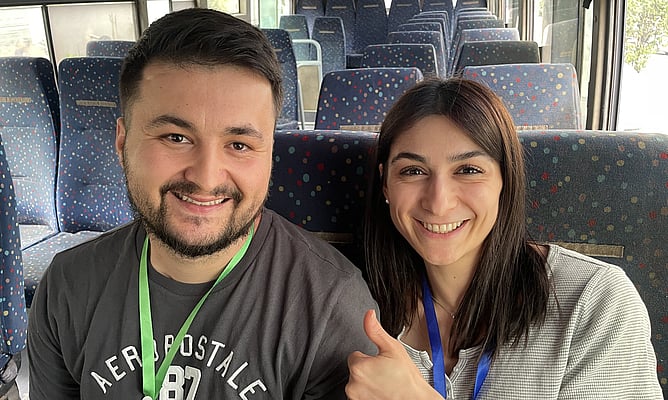
Dr Mirzabek Dosov and Zalina Dosov. Mirzabek recently received his PhD from Oxford, Uzbekistan’s first ever doctor of theology. Congrats, Dr Mirzabek!
These organisations are transforming lives in profound ways and yet do so with very little funding. Those of us from more affluent countries who belong to the body of Christ can make a significant impact simply by giving financially to these ministries. Their leaders sacrifice a lot for their work and even modest gifts can go a long way in developing countries, where costs are considerably lower but resources typically in short supply. If you’d like to support any of these ministries, please follow the links below.
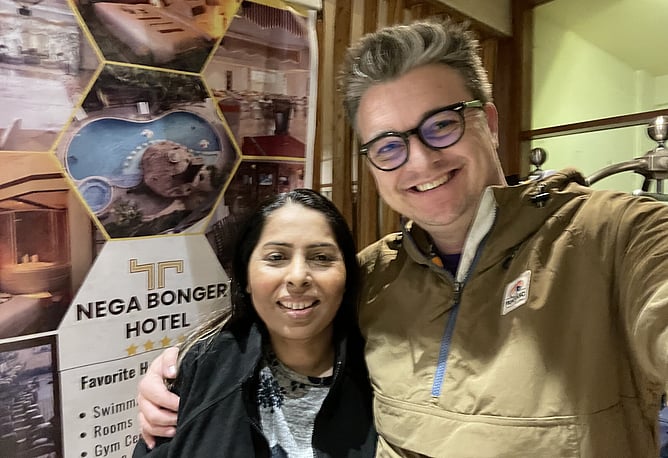
Sajida Iqbal is the founder of Noor Ministries, a Pakistani school that educates children in order to give them a brighter future. Sajida is also working towards a PhD. (Want to support her work? See details below.)
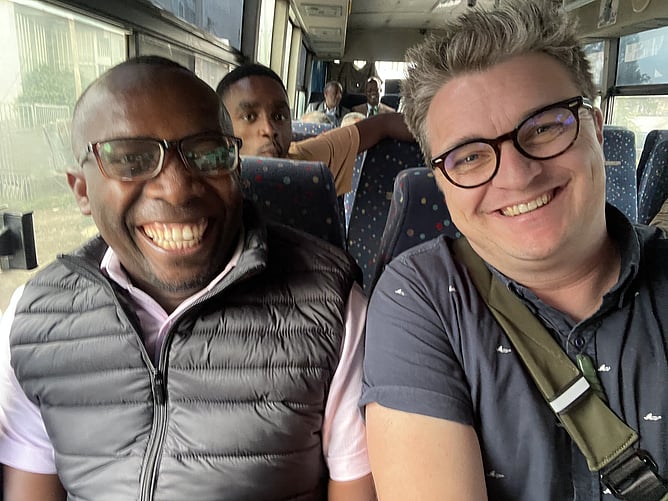
Paul Natuhumuriza founded Life Schools, which provides high-quality Christian education to Ugandans. (Want to support his work? See details below.)
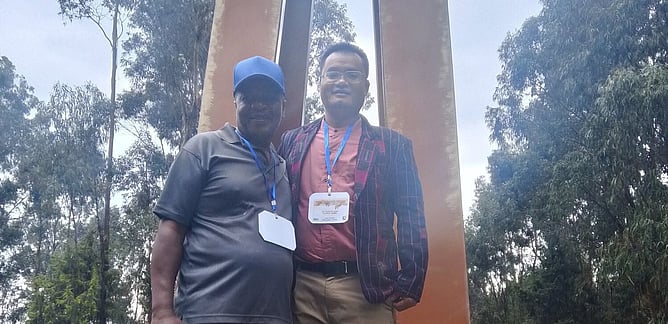
Moses Kokoyo (Kenya) and Thang Bu Naing (Myanmar), both involved in Bible training in their respective countries. (Want to support their work? See details below.)
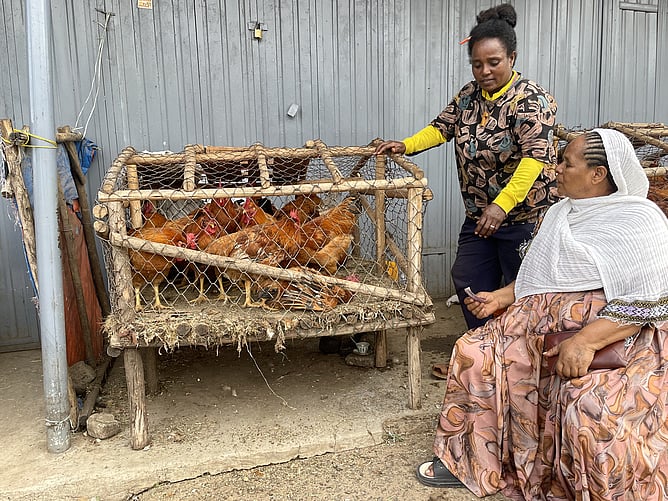
Chicken market.
The point of a gathering like BTN is ultimately in the scattering, as attendees return to their home contexts, not only buoyed by the sense of common purpose, but also better equipped for the task of Bible training. Despite the vast cultural and national differences, the goal of all the attendees is the same: training believers to teach the word so that people may encounter the Word, Jesus Christ, who remains the hope of this large, diverse, and fascinating world.
Support these ministries (Search for the Project name on the GC3 Give Project page):
Paul Natuhumuriza – GC3 Give page – Project name: Paul N (973)
Sajida Iqbal – GC3 Give page - Project Name: Sajida I (974)
Thang Bu Naing - GC3 Give page - Project Name: Thang Bu N (975)
Moses Kokoyo - GC3 Give page – Project Name: Moses K (976)
Mirzabek Dosov - ATM Donation Page - Specify: Mirzabek Dosov